-
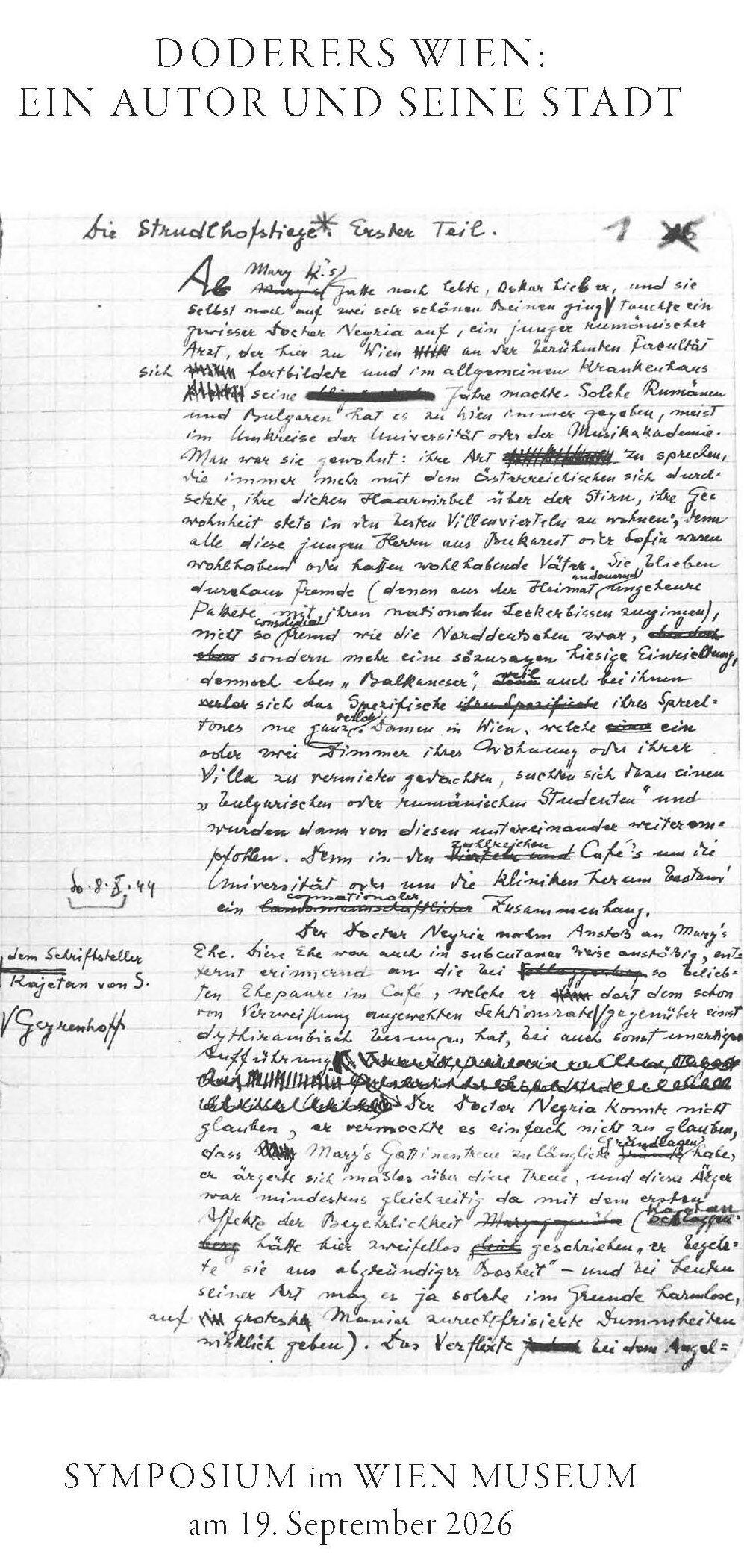
Maxl & Mötz supports the Doderer Symposium 2026 at the Wien Museum
Together with PORR AG and Julius Meinl Austria GmbH, our firm is supporting the rediscovery of one of the most linguistically powerful Austrian authors of the 20th century. Maxl & Mötz Rechtsanwälte is among the sponsors of the symposium „Doderer’s Vienna: An Author and His City“, which will take place on 19 September 2026 at…
-

Register of Beneficial Owners – changes from 1 July 2024
In its capacity as the register authority, the Federal Ministry of Finance has provided information about the changes to the reporting of beneficial owners under the WiEReG in its Technical News 2024/02. These changes, which are based on the WiEReG Amendment 2023 (BGBL I 2023/97), enter into force on 1 July and concern reports transmitted…
-
Insurer’s waiver of recourse in cases of slight negligence in favour of the tenant
Recently, the Supreme Court changed its long-standing line of case law on the protection of the tenant’s interest in property compensation under a property insurance contract and re-evaluated this question. Accordingly, the interpretation of the landlord’s insurance contract may result in the inclusion of the tenant’s interest in property compensation in the form of an…
-

No prohibited motive dismissal where the employee refuses a change to the contract
In a decision recently obtained by our firm, the Supreme Court once again made clear that there is no prohibited „motive dismissal“ (Motivkündigung) where an employee refuses the employer’s wish for a change to the employment contract and is dismissed as a result (OGH of 29 March 2023, 8 ObA 11/23k). The so-called „motive dismissal“…
-

On the bad-faith application for trade marks (specifically the „Lippizaner“ marks)
Bad faith is to be assumed in particular where the applicant, without any specific business relationship with potential users, applies for a multitude of marks with little or no distinctive character, only a small proportion of these applications actually leads to registration, and no realistic business model is discernible for any use of these marks…
-
A turning point in the limitation of holiday entitlements
Following the most recent case law of the ECJ on the limitation of holiday entitlements, it was only a matter of time before the principles thereby established would also be reflected in Austrian case law. As a result, the principle hitherto firmly anchored in people’s minds (and strongly simplifying) – that holiday must be taken…
-

Misleading top-position advertising
Claiming a top position – for example, as the largest company in Austria – presupposes that there actually is a steady and substantial lead over all competitors in Austria (OGH 25 April 2023, 4 Ob 223/22f). Under § 2(1) UWG, a commercial practice is regarded as misleading if it contains incorrect information or is otherwise…
-
On identical surnames as word marks
A registered trade mark does not entitle its proprietor to prohibit a third party – where that third party is a natural person – from using their name or address in the course of trade, provided that this accords with honest practices in industrial and commercial matters (OGH 18 October 2022, 4 Ob 131/22a). Under…
-
New developments on the justification of dismissals
Recently, against the background of the COVID-19 pandemic, the Supreme Court issued a decision on the justification of dismissals of „querulous“ employees, from which it can also be inferred, for situations without any COVID connection, that the employer need not accept private opinions voiced within the workforce that conflict with important company concerns or objectives…
-

Right of first refusal of legal entities in mergers
In the case of a merger by absorption pursuant to § 1(1)(1) GenVG, a right of first refusal granted to the transferring cooperative passes, by way of universal succession, to the acquiring cooperative (OGH 23 June 2022, 5 Ob 215/21k). Under the mandatory provision of § 1074 ABGB, a right of first refusal can neither…